



Basic approach
The Futaba Group has established the basic purchasing policies to manufacture parts that satisfy our important customers.
- 1. Optimum purchasing based on openness and fairness
- We select suppliers by making clear our expectations on safety, quality, delivery time, cost, technology, SE ability, SDGs activity, and information security and properly assess their achievements and other outcome.
- 2. Strategic purchasing in global and SDGs aspect
- To adapt to customers' monozukuri, new technologies, and new production methods, we proactively cooperate with local suppliers to strengthen our procurement base and contribute to the regional community.
- 3. Long-term continuous business built upon mutual trust
- Under the premises that the transactions will be a long-term transaction, we will aim to achieve mutual prosperity and increased competitiveness of the entire supply chain through interactive communication and support.
Taking on challenges together in partnership with the supply chain
While the environment is changing dramatically, including the electrification of vehicles and increasing needs to work on carbon neutrality and the SDGs, we are considering various measures to respond to these changes in the supply chain overall, including suppliers. And, we will also provide various opportunities to enable suppliers to respond to these difficulties themselves.
While developing and sharing a common basic way of thinking, policy, and mindset for Futaba procurement globally, procurement functions are promoting global One Team Purchasing activities that depict the ideal vision from a medium to long-term perspective. Futaba is aiming to operate an optimal system that ensures the governance and quality and efficiency of our work, and to realize forward-looking strategic procurement based on both independent operations in each region and overall optimization.
Establishment of trust with suppliers
Specific activities
We hold purchasing policy briefings to explain our annual policies, initiatives, and future direction.
We also use these in the aims of deepening mutual understanding and building long-term relationships of trust by sharing specific activities and targets for safety, quality assurance, stable supply, cost, etc. for each supplier through expected activities. In addition, we honor and commend our suppliers for their outstanding results.
Communication activity
-
Since FY2023, we have designated March and September of each year as months for price negotiations, and have been engaged in individual communication activities regarding the labor environment and logistics issues, which are changing rapidly, and promoting initiatives to help suppliers solve their problems. In FY2024, we particularly focused on price shifting of labor costs as a key issue, and promoted initiatives tailored to the individual situations of suppliers.
-
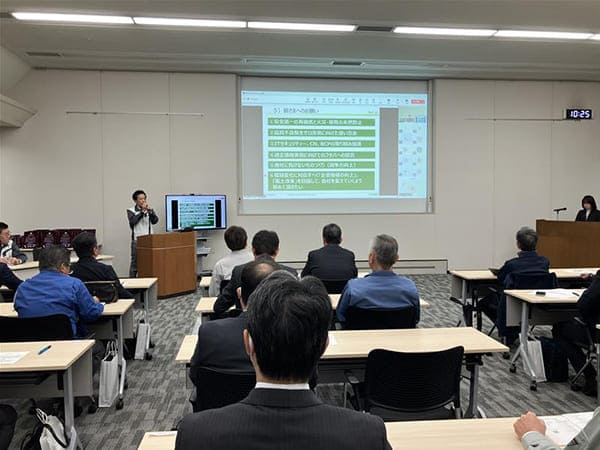
Purchasing policy briefing (held live online)
In April 2022, Futaba announced its Declaration on Partnership Building in support of the objectives of the Partnership Building Promotion Council for the Future, which includes the Cabinet Office and the Ministry of Economy, Trade and Industry among others.

Activities to strengthen collaboration and competitiveness through expansion of internal activities
-
We are endeavoring to strengthen competitiveness throughout the supply chain by enlisting suppliers’ participation in our internal quality control activity confirmation meetings and production division meetings. In addition, we are carrying out safety and quality experience education, information security seminars, and health management seminars, and we will continue to expand these collaborations going forward.
-
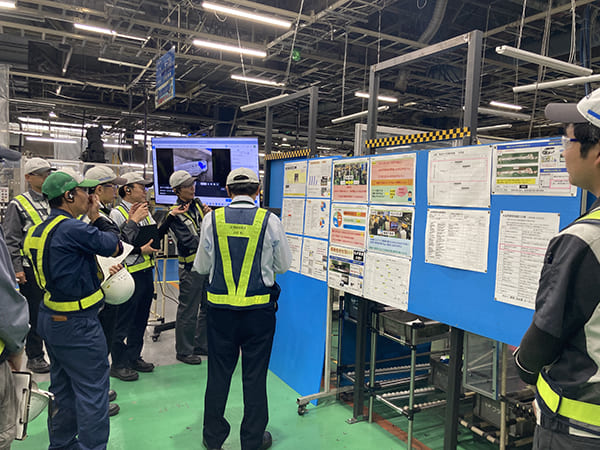
Participation in a production division meeting
Activities of Suppliers Cooperative and developing human resources
In FY2024, we launched theme study groups as one of the activities of Suppliers Cooperative. Study groups met on specific themes such as how to work/work style reforms, carbon neutrality, and improving proposal capabilities, as we aim to build an organization that every employee can play an active role by promoting mutual improvement among suppliers.
-
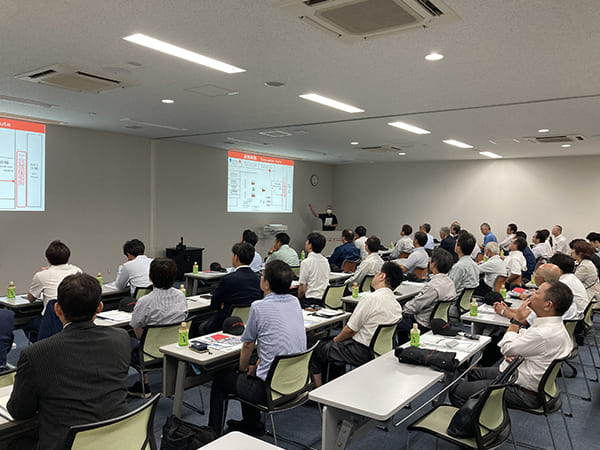
Suppliers Cooperative seminar
-
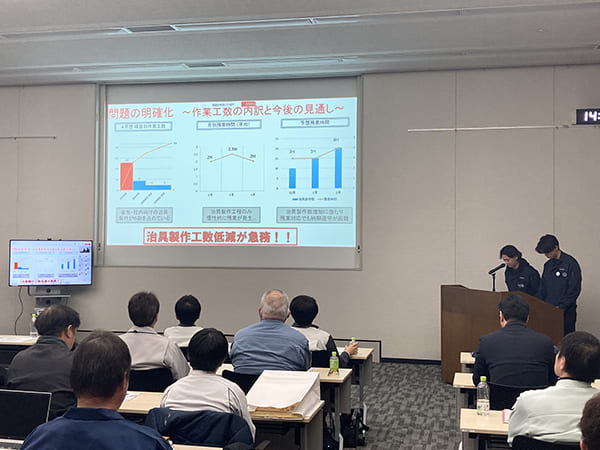
Circle Presentation
Initiatives for Supplier Sustainability Guidelines and Green Purchasing Guidelines
With the aim of making business operations sustainable, we formulated the Supplier Sustainability Guidelines and Green Purchasing Guidelines, thereby stating our expectations toward our suppliers and incorporating them into our master transaction agreements and acting accordingly. The Supplier Sustainability Guidelines were formulated under the belief of the necessity of working across the entire supply chain to promote issues and ideas from diverse perspectives, such as prohibitions on illegal immigration, child labor, and forced/excessive labor, the protection of human rights and the concept of equality, mutual dialogue with employees, prohibitions on harassment, diversity & inclusion, prioritizing a safe and healthy working environment, initiatives to improve skills and capabilities, fostering a corporate culture that develops personnel, and more. As for the Green Purchasing Guidelines, in accordance with the Futaba Group Environmental Charter and Environmental Policy, the Group is promoting initiatives related to compliance with laws and regulations, management of chemical substances, reduction of CO2 emissions, efficient use of resources, impacts on the water environment, and the creation of a society in harmony with nature, in order to realize an environmentally friendly and sustainable supply chain.
Initiatives for Carbon Neutrality
The Group shares its plans for the medium- and long-term reduction of CO2 emissions with its suppliers, aiming to realize a decarbonized society throughout the entire supply chain. In our activities for FY2025, we have set a new target of reducing CO2 emissions (Scope 1 and 2) by 50% or more compared to FY2019 by FY2030, aligning our suppliers’ targets with the Futaba Group’s overall target. (Previous target: 27% reduction vs. FY2021) In FY2024, we will invite major suppliers to participate in our production division meetings (production on-site improvement confirmation meetings) to see our activities first-hand in the field, and to present high-quality initiatives at each company to mutually stimulate activities. We are also working to enhance efforts overall by sharing examples of our own initiatives, as well as the good practices contributed by suppliers online. At the Carbon Neutral Study Group organized by the Suppliers Cooperative, we created opportunities for mutual study with our suppliers through explanations of the latest activities of the Futaba Group, including case studies of the introduction of solar power generation, and study sessions with outside lecturers.
Respect for human rights and responsible procurement of minerals(conflict minerals)
In order to carry out business activities respecting human rights based on the Futaba Group Human Rights Policy, we are continuously demanding that major Futaba suppliers periodically conduct self-assessments and redress issues. We have entered into memorandums of understanding with all 434 of our purchasing-related suppliers to confirm their endorsement of this policy and to promote respect for workers’ rights. We also recognize that responsible purchasing of mineral resources and raw materials is an important issue across the supply chain, and we regularly conduct global surveys on the use of conflict minerals and extended minerals.
Risk assessment for new suppliers
We have established and operate internal rules on the necessity of transactions, risks, and other confirmation items with regard to suppliers with whom we are going to start transactions newly. After evaluating their financial situation, technical capabilities, prices, the state of acquisition of certification related to quality management such as IATF 16949 and ISO 9001, and other items, we evaluate their management capabilities based on audits before deciding whether or not to start transactions.
For fair and honest purchasing activities
Rigorous compliance
To strengthen the compliance of the entire Group, a company-wide, cross-functional structure was established to inspect the status of compliance with relevant laws and regulations, particularly the Subcontract Act, and to rebuild a system to prevent violations of laws and regulations. In addition, as part of efforts to strengthen governance, the audit and legal divisions will continuously monitor the status of the Company and its subsidiaries.
Education about the “Act Against Delay in Payment of Fees, etc. to Small and Medium-sized Entrusted Business Operators in Manufacturing and Other Specified Fields”, etc.
We regularly provide training using concrete examples to a wide range of employees, including not only the procurement department but also the production department, in order to deepen their understanding. We will continue to provide all employees involved in purchasing operations with education on compliance with various laws and regulations, including the “Act Against Delay in Payment of Fees, etc. to Small and Medium-sized Entrusted Business Operators in Manufacturing and Other Specified Fields”, and on the basic approach and knowledge required for purchasing operations, so that each employee can respect suppliers as a partner and carry out fair and honest purchasing activities.